The quick answer
Weigh food in the state named in the recipe. Dry pasta means before cooking; cooked rice means after cooking. Meat usually loses water during cooking, while grains absorb it, so the same number of grams does not describe the same portion.
In this guide
Read the words beside the weight
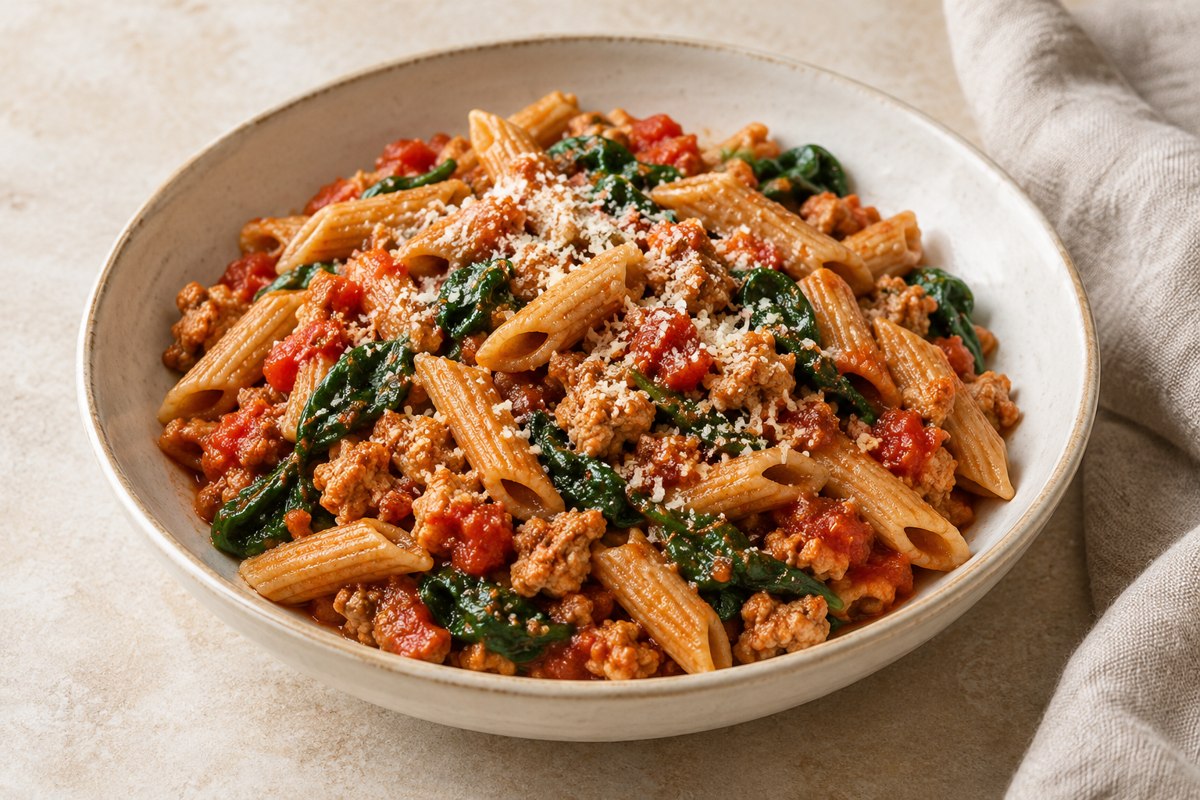
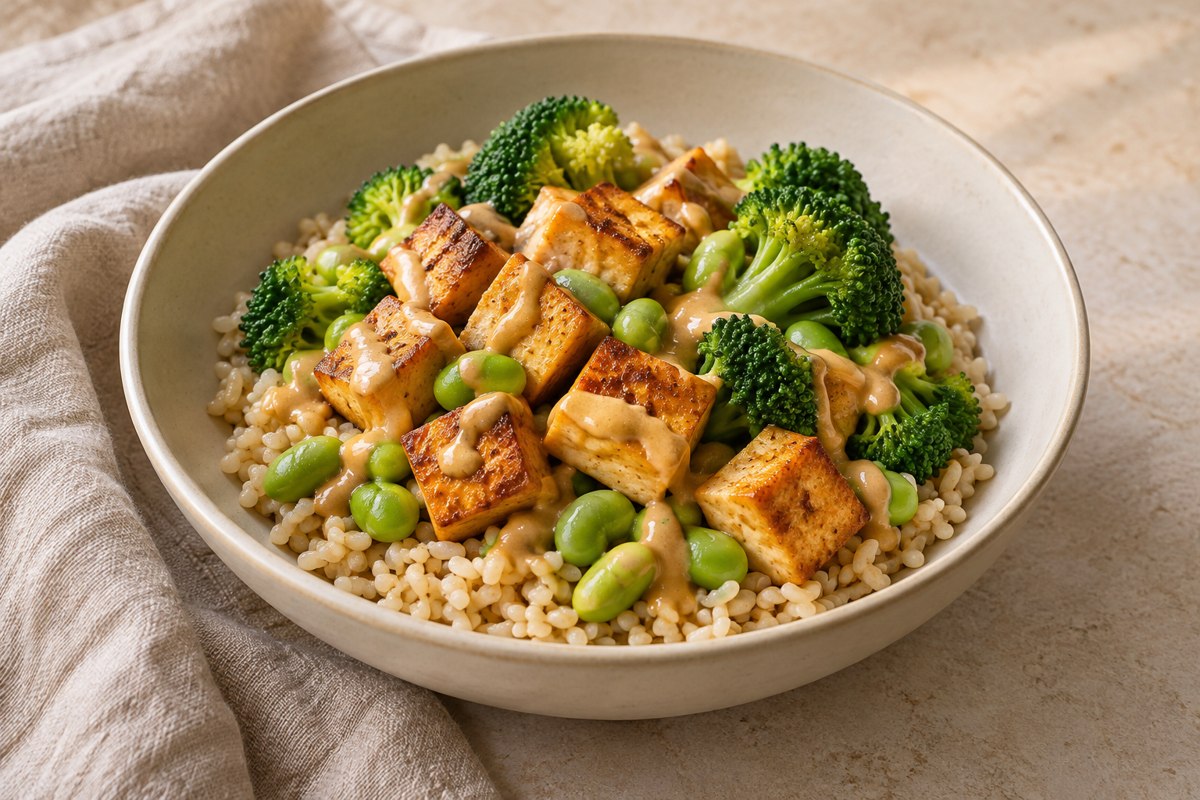
Look for dry, raw, cooked, drained or peeled. In our turkey pasta, pasta is weighed dry; in our tofu bowl, rice is weighed cooked. These instructions take priority over a general rule.
Measure your own batch
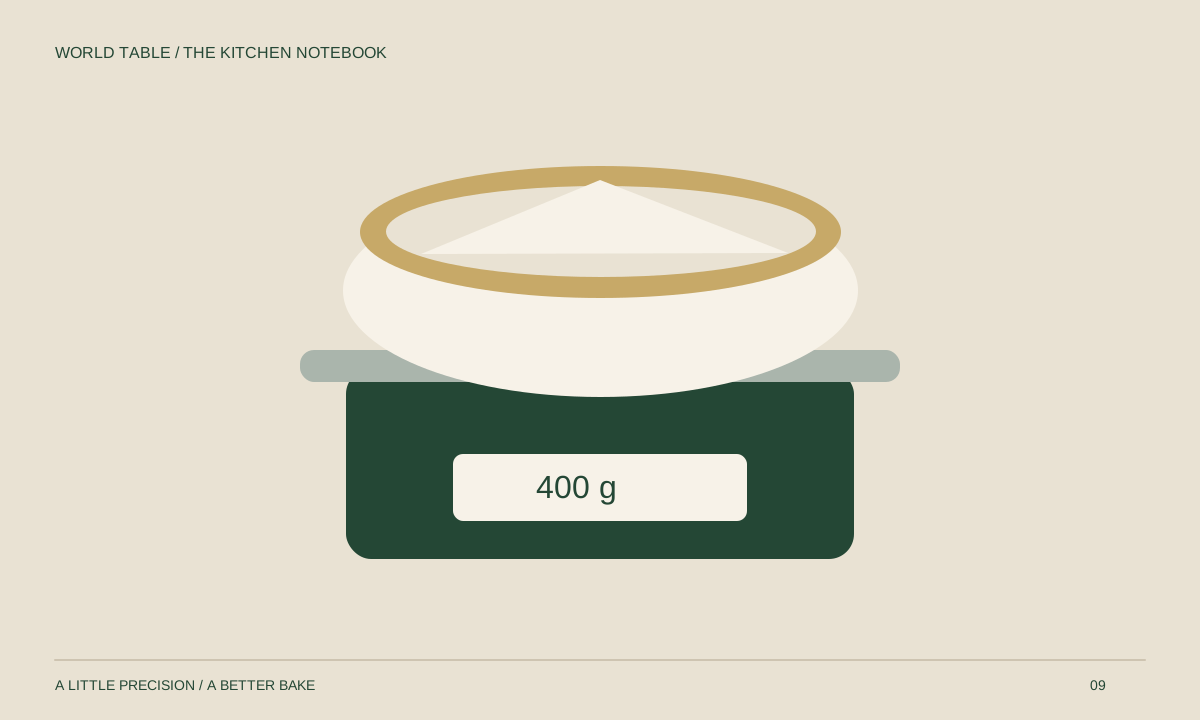
There is no reliable multiplier for every brand and method. Weigh the dry grain, cook it, then weigh the finished batch without the pan. The change depends on water absorption, draining and cooking time.
Divide the finished dish
For equal portions, divide the total edible cooked weight by the number of servings. A 600 g finished batch divided into 3 portions gives 200 g per portion. This is an arithmetic example, not a dry-to-cooked conversion.
Match nutrition data to the food
Use a raw entry for a raw weight and a cooked entry for a cooked weight. Include measured oil and sauces separately when calculating a recipe. Draining or discarding juices can change the final estimate; weighing alone cannot measure those losses.
A few useful answers
Does cooking create calories?
No. Water gain or loss changes weight; added ingredients and discarded food affect the calculation.
What if the recipe is unclear?
Check the method or ask the author rather than guessing whether the listed weight is cooked.
Sources and further reading
Use the full recipe alongside these tips, and follow the stated care and safety limits of your equipment.
Put it into practice