The quick answer
Divide soup into shallow containers and refrigerate promptly instead of leaving a large pot out to cool. Freeze in labeled portions with expansion space. Thaw in the refrigerator or reheat safely from frozen; bring soup to a boil and check that substantial pieces are thoroughly hot.
In this guide
Cool a large batch in smaller portions
A deep stockpot cools slowly. Divide the soup into shallow containers and refrigerate within two hours of cooking, or within one hour when the surroundings exceed 90°F / 32°C. Keep the refrigerator at 40°F / 4°C or below. An ice-water bath can help cool a pot while you stir it, but it is not a reason to leave it on the counter all evening.
Refrigerated leftovers generally need using within three to four days. Freeze sooner if you will not eat them in that window. Freezing does not make soup that was mishandled at room temperature safe again.
Pack for the meal you will actually eat
Choose suitable containers
Use freezer-safe containers or bags. Leave the manufacturer’s suggested headspace for expansion; do not fill a rigid jar to its rim.
Label clearly
Write the soup name, freezing date and portion size. Flat bags can save room once safely cooled and sealed.
Separate delicate additions
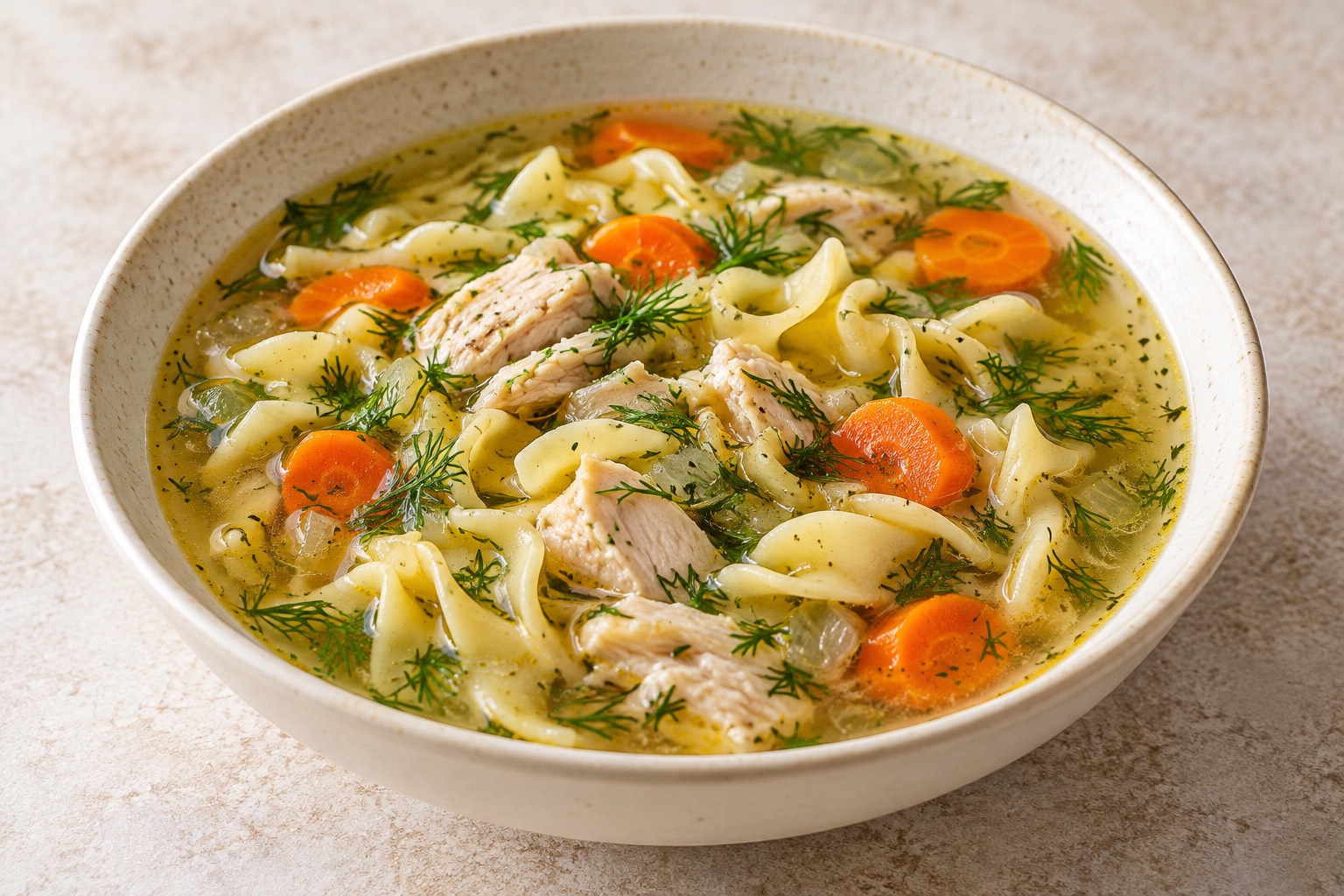
If making a batch specifically for freezing, consider keeping cream, tender herbs, cooked noodles and crisp toppings separate until serving.
Freeze practical quantities
Single-meal portions reduce repeated thawing and make it easier to reheat the amount you need.
Expect some ingredients to change
| What you notice | What to change |
|---|---|
| Noodles soften after freezing | Freeze the soup base and cook noodles when serving. |
| Cream sauce separates | Reheat gently while stirring; adding cream fresh may give a better result. |
| Potato pieces become grainy | Consider a different soup for freezing or accept the texture change. |
| Herbs lose fresh character | Add a fresh garnish after reheating. |
Reheat the whole portion evenly
Thaw in the refrigerator, not on the counter. Alternatively, heat from frozen in a saucepan with a little liquid as needed, breaking up and stirring the thawing portion. Avoid a slow cooker for reheating cold leftovers because warming may be too slow.
Bring soups to a rolling boil, stirring so the heat reaches the whole portion; check chunky leftovers reach 165°F / 74°C. In a microwave, use a suitable vented cover, stir and check multiple spots. For best quality, aim to use frozen soup within a few months; texture, ingredients and packaging affect how well it keeps.
A few useful answers
Can I freeze soup with pasta already in it?
Yes if safely handled, but the pasta may become softer. Freezing the base separately usually preserves texture better.
Can I leave the soup out until completely cold?
Do not leave it out for hours. Divide it and refrigerate promptly.
Use the full recipe alongside these tips, and follow the stated care and safety limits of your equipment.
Put it into practice