The quick answer
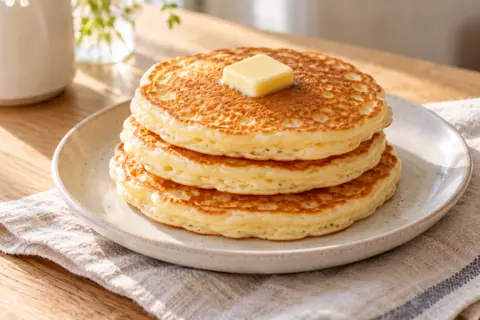
For thick American-style pancakes, check fresh leavening, the recipe’s flour-to-liquid balance and gentle mixing. Cook on a moderately heated pan and avoid pressing the pancakes down. Thin blini and crepes are intentionally flat.
In this guide
Make sure you want the same style of pancake
A crepe or thin blin is not a failed fluffy pancake. It has a different batter and usually a different spreading technique. Start with a formula written for the height and texture you want, rather than adding baking powder to a thin-pancake recipe.
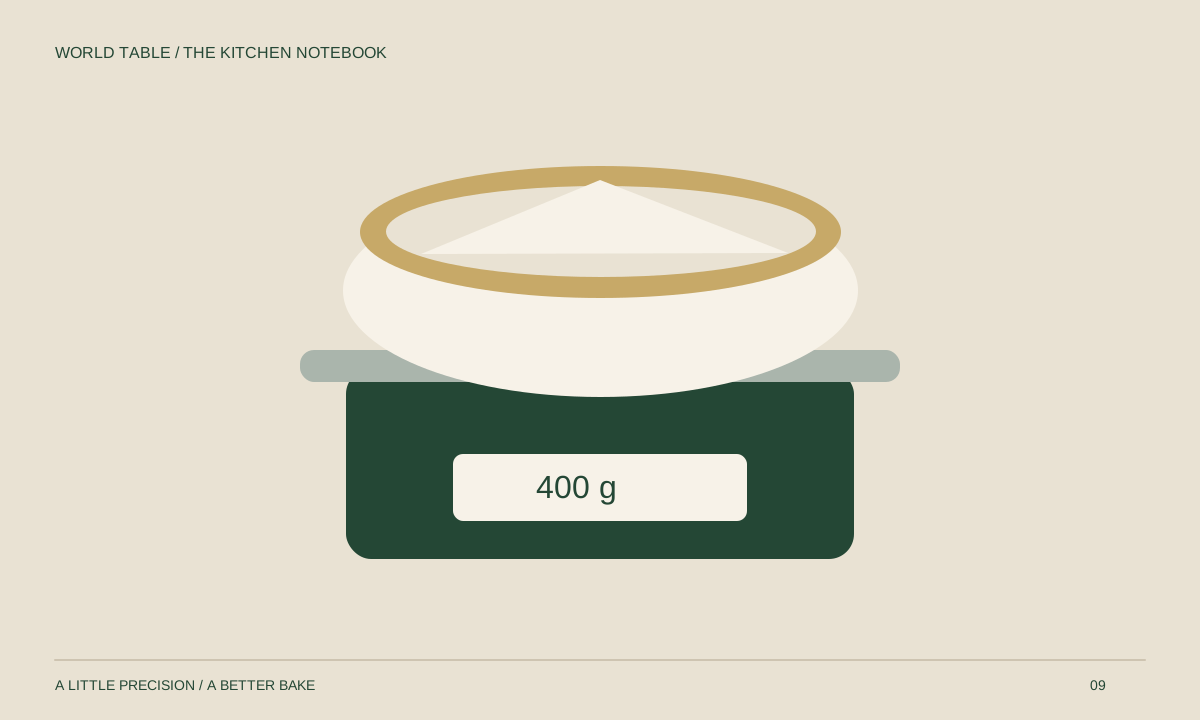
If your pancakes spread immediately into a very thin circle, check the liquid quantity and how the flour was measured. Use the recipe’s gram weight when available. A batter should match the description in that formula; not every successful batter has the same thickness.
Mix gently and cook at the right time
Measure first
Combine dry ingredients evenly so leavening is distributed rather than left in clumps. Prepare the pan before the finished batter waits a long time.
Use the correct leavener
Baking soda and baking powder are different. Keep the type and quantity specified; inspect the package’s age and storage conditions.
Stop vigorous mixing
Fold wet and dry ingredients together only until combined. Small lumps are usually preferable to beating a standard batter until perfectly smooth.
Follow the stated rest
Some recipes benefit from a short rest; others are designed for immediate cooking. A long improvised wait can change thickening and gas retention.
Manage the heat and the flip
A pan that is too cool lets batter spread before it sets. One that is too hot colors the outside before the middle cooks. Use a small test pancake, then adjust the burner. Turn once the first side is set and do not press the top with the spatula.
| What you notice | What to change |
|---|---|
| Flat and wide | Review batter thickness and pan temperature. |
| Dense or rubbery | Reduce mixing and check the flour measurement. |
| Little lift in every pancake | Review leavener type, freshness and quantity. |
| Burnt outside, wet inside | Lower heat and reduce pancake size. |
Change one variable next time
Record what happened with the first pancake. Keep the same formula and change the likely cause, such as measuring flour by weight or using fresh baking powder. That teaches you more than increasing flour, eggs and leavening all at once.
Whipped egg whites can help in a recipe designed for them, but they are not an automatic repair for the wrong batter ratio. Fold them carefully and use that recipe’s method. Extra leavening can create an unpleasant taste or a rise that collapses.
A few useful answers
Can I add more baking powder to finished batter?
It may distribute unevenly and change the flavor. Correct the measurement in the next batch instead.
Why did my pancakes rise and then collapse?
Check undercooking, excess leavening and whether the batter formula was changed.
Use the full recipe alongside these tips, and follow the stated care and safety limits of your equipment.
Put it into practice