The quick answer
Keep the sealing rim free of filling, oil and excess flour. Use a small enough portion to close without stretching, press the entire seam firmly and cook in batches at a controlled simmer. A floating dumpling still needs the recipe’s full doneness check.
In this guide
Give the wrapper a fair chance
Rest dough as the recipe directs so it rolls without springing back excessively. Keep unused dough and cut wrappers covered to prevent a dry skin. Roll evenly: an extremely thin weak center tears, while a thick rim can remain hard after the rest cooks.
Use only enough flour to prevent sticking. A dusty rim is difficult to bond. For purchased wrappers, follow the package’s sealing method; some need a light touch of water, while fresh homemade dough may seal without it.
Build a continuous seam
Portion the filling
Use a modest measured amount and leave a clear border. More filling is not better if the wrapper cannot close comfortably.
Keep the rim clean
Move away any meat, rice or grease on the sealing area. Brush off excess flour before closing.
Release trapped air
Bring the sides together while gently moving air out around the filling. Do not force the filling through the edge.
Press and inspect
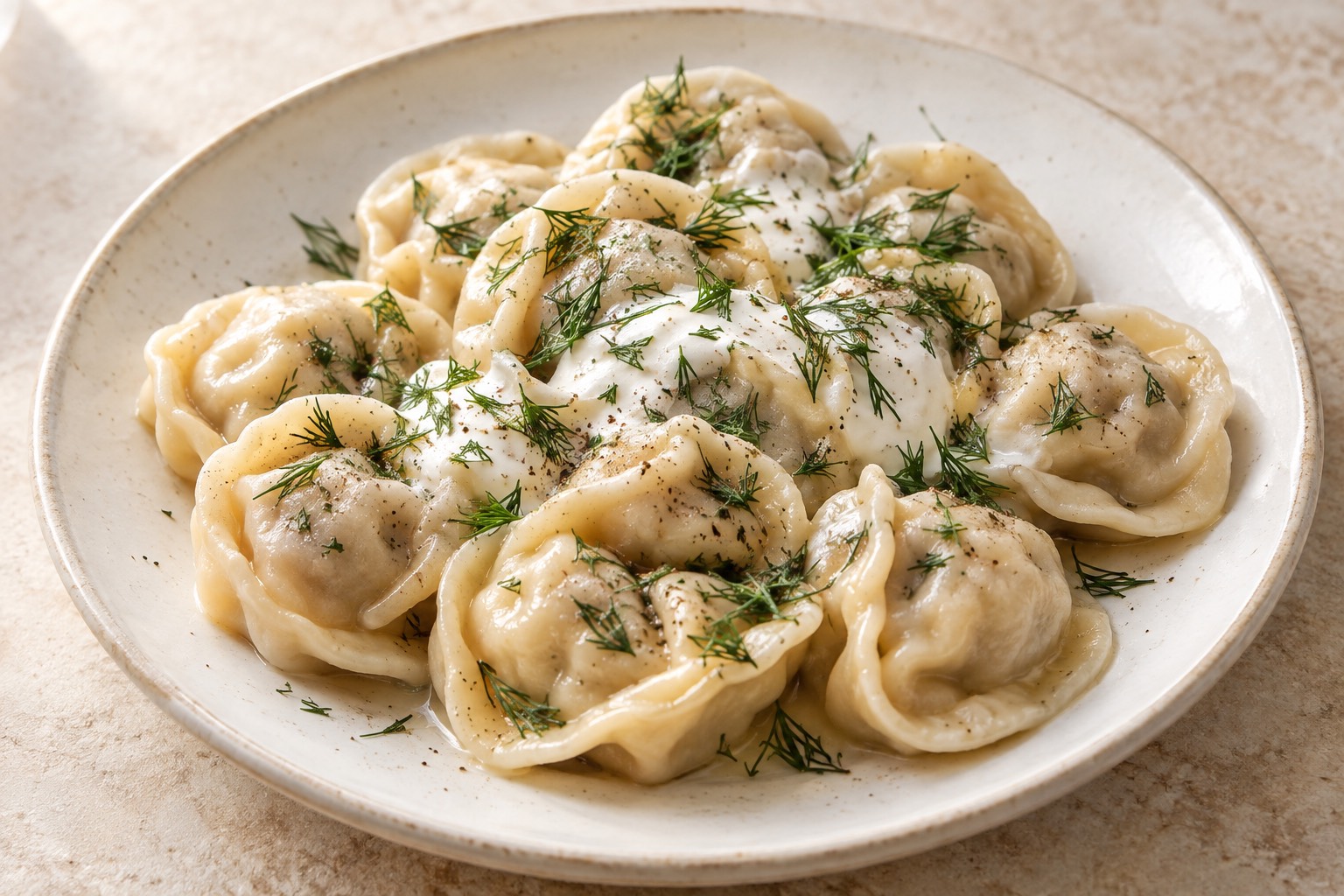
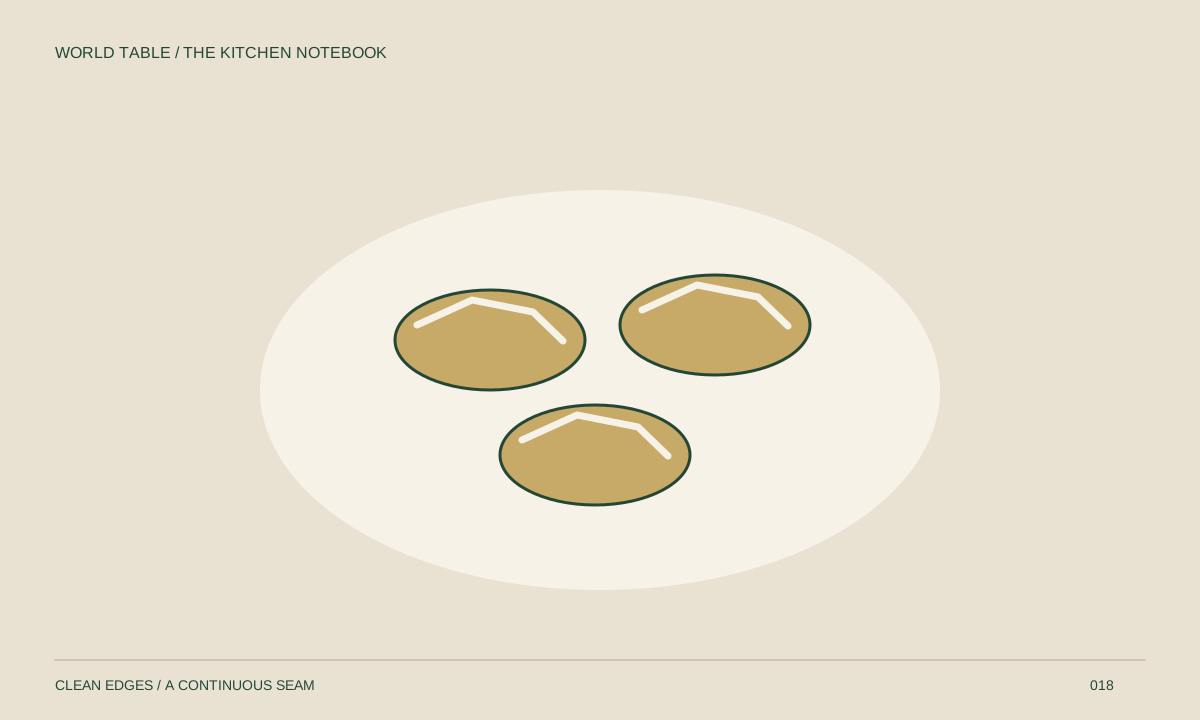
Pinch along the entire seam, then check for gaps. For pelmeni, join the corners without pulling the sealed crescent apart. Set on a lightly dusted tray.
Reduce stress in the pot
Use enough cooking liquid and cook manageable batches. Add dumplings carefully, then stir gently with a suitable utensil so they do not attach to the base. Maintain the recipe’s steady simmer rather than a violent boil that throws delicate parcels around.
Do not thaw frozen dumplings on the counter until their bottoms turn sticky; follow the recipe’s cook-from-frozen method. Floating reflects buoyancy and does not prove that a raw meat filling is safely cooked. Use the recipe timing and a suitable thermometer check for the filling.
Fix the part that is failing
| What you notice | What to change |
|---|---|
| Seam opens cleanly | Review dry edges, excess flour and insufficient pinching. |
| Wrapper tears beside the seam | Reduce filling or improve even rolling. |
| Several dumplings stick together | Space them before cooking and reduce batch size. |
| Filling leaks during a hard boil | Lower agitation and check that seams are intact. |
A few useful answers
Should I add water to every seam?
Use the amount and method suited to the wrapper. Too much water makes a slippery paste rather than a stronger seal.
Can I repair a tear?
A small clean tear may be patched with dough before cooking. A badly damaged wrapper is usually easier to replace.
Use the full recipe alongside these tips, and follow the stated care and safety limits of your equipment.
Put it into practice