The quick answer
Choose a stable wood or plastic board large enough for your usual ingredients and easy to clean in your kitchen. Keep a separate clean surface for ready-to-eat food when preparing raw meat, poultry or seafood. Replace boards with deep, hard-to-clean damage.
In this guide
Choose a material you will actually maintain
| Material | Useful strengths | Check before buying |
|---|---|---|
| Wood | Comfortable cutting surface; attractive enough to serve from. | Hand-washing, drying space and the maker’s oiling routine. |
| Plastic | Often light and convenient for separate prep tasks. | Dishwasher approval, rigidity and resistance to deep scoring. |
| Glass or stone | Easy to wipe as a serving or display surface. | Hard surfaces are poor everyday companions for a sharp knife. |
Fit the ingredient, sink and counter
Imagine cutting your largest ordinary ingredient: a cabbage, a loaf or a family batch of vegetables. A board that is only just bigger than the food leaves little room for safe hand placement or chopped pieces. Check dimensions against the counter and the space where you can wash it.
A juice groove can help with a roast, but it reduces the flat cutting area and adds a channel to clean. A thin flexible mat may help transfer chopped vegetables, yet it still needs a stable base. Lift and grip the board before buying if possible; weight helps stability but can make washing awkward.
Plan the workflow, not just the purchase
Separate raw meat, poultry and seafood preparation from salad, bread and other ready-to-eat foods. Two clearly identified boards make that easier, though proper cleaning between tasks is still essential. Knife handles, taps and towels can transfer contamination even when the board is changed.
Wash after each task with hot soapy water, rinse and dry. Use a sanitizing method appropriate for the board and the product label when needed. Replace a board when deep grooves, splits or damage prevent thorough cleaning; changing its color does not solve the problem.
Keep the board from moving
Choose a flat position
Use a clear, level worktop. Keep the board away from the counter edge.
Check the grip
A board with sound non-slip feet may be enough. If using a clean damp cloth beneath a flat board, smooth it out so the board sits steadily.
Prepare space for the cut
Move chopped ingredients into a bowl rather than piling them where the knife travels. Wash the support cloth afterward, especially after raw-food preparation.
A practical two-board starting setup
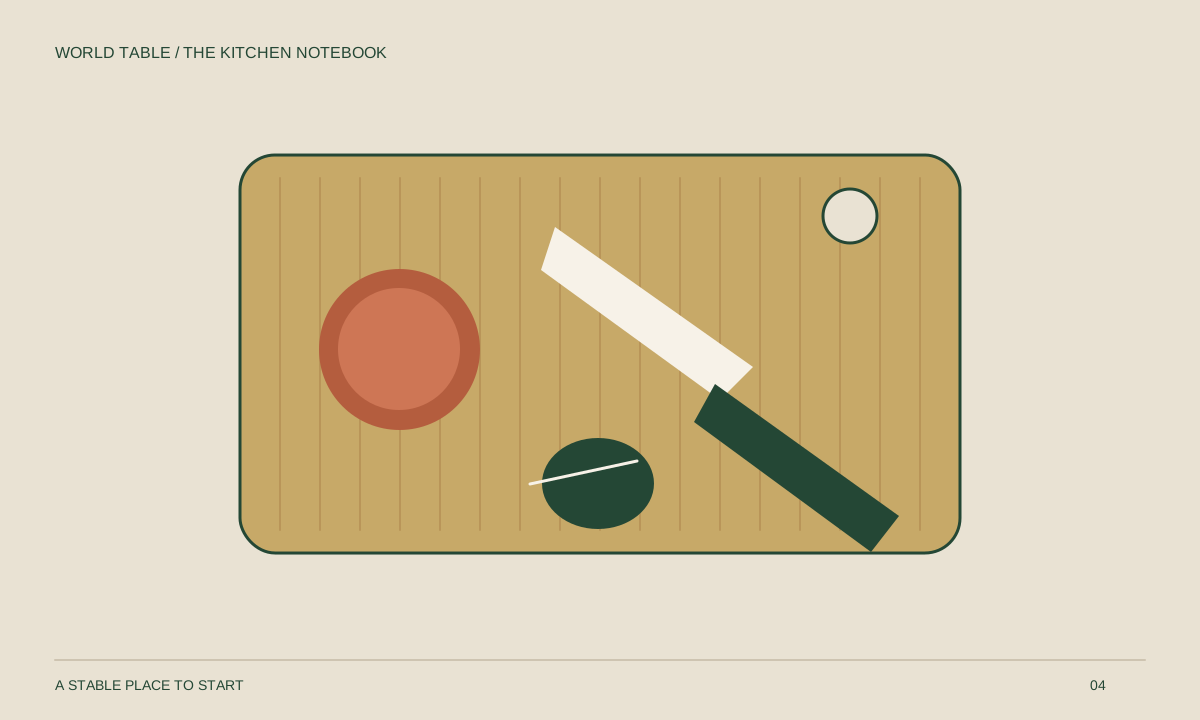
For many home kitchens, one roomy board for vegetables and bread plus a separate easily cleaned board for raw meat is a more useful purchase than several small novelty boards. Add specialized sizes only when a real task calls for them. Choose a board you can dry and store upright with airflow.
A few useful answers
Is wood automatically unsafe for raw meat?
Material alone does not decide safety. Cleaning, condition, separation of tasks and suitable sanitizing matter.
Should I buy the biggest board possible?
Buy one that fits your food and workspace but that you can still wash and dry properly.
Care and appliance instructions vary by model. Use your product’s stated limits and the method that suits its material.
Put it into practice