The quick answer
Honing is routine edge maintenance; sharpening removes metal to rebuild an edge that has worn dull. A smooth steel mainly realigns a rolled edge, while ceramic and diamond rods can also abrade it. The tool, steel and knife maker’s instructions matter.
In this guide
Start with the symptom
If a previously useful knife starts slipping on tomato skin or crushing herbs, it needs attention. Wash and dry it before judging the edge: sticky residue can also make cutting awkward. Visible chips or a damaged tip call for repair rather than a few more strokes on a steel.
| Symptom | Likely next step |
|---|---|
| A slightly rolled edge after regular use | Try gentle honing with a compatible tool. |
| Dull along the edge; honing no longer helps | Sharpen on an appropriate stone or use a sharpening service. |
| Chips, broken tip or badly uneven bevel | Get a repair assessment before removing more metal. |
| Serrated or ceramic knife | Use its dedicated care method, not a generic honing routine. |
A controlled honing setup
Only hone if the manufacturer recommends the rod for your blade. Hard, thin or specialized edges may need a different maintenance tool. Ceramic and diamond surfaces are abrasives, so repeated forceful use can change the edge rather than merely straighten it.
Stabilize the rod
For a suitable rod, place its protected tip on a non-slip board and hold it vertically with your supporting hand behind the guard.
Match the edge angle
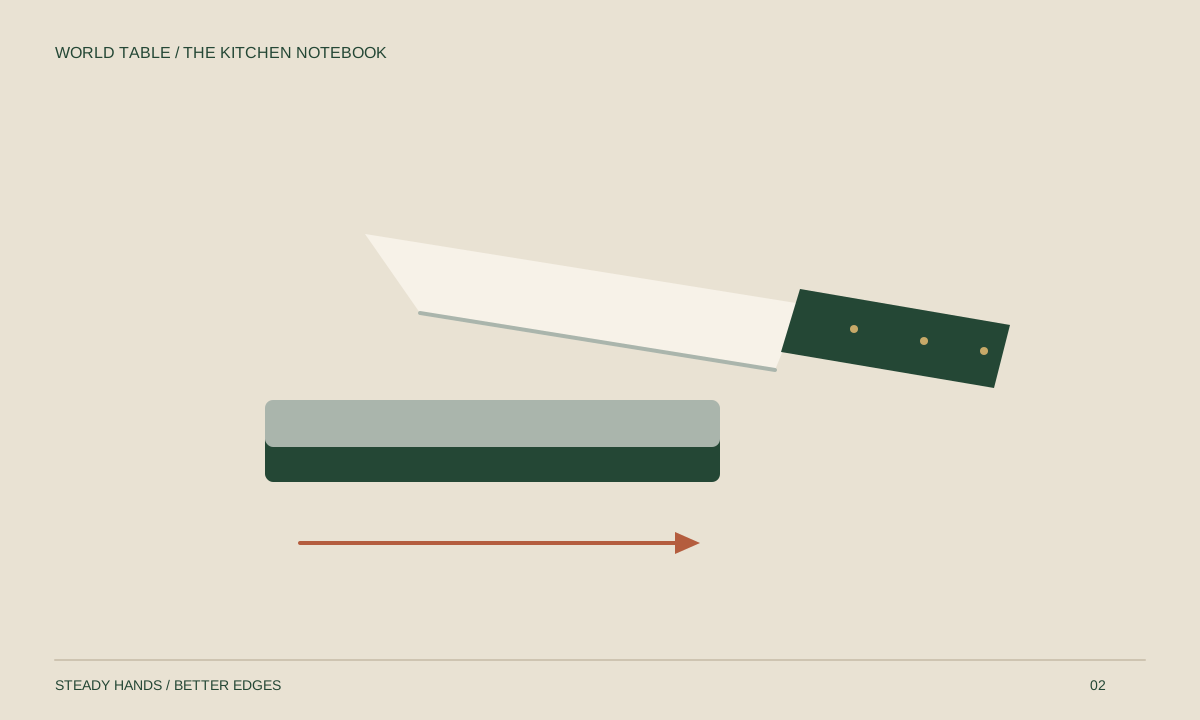
Follow the knife’s specified bevel angle. Draw the blade from heel to tip in a slow, controlled stroke, keeping the edge away from fingers.
Alternate and inspect
Use a few light passes on each side, then wipe or wash away residue and test on food on a board. Stop if the edge does not improve.
When a stone or service makes more sense
Sharpening creates a fresh cutting edge by removing steel. It is the appropriate next step when normal maintenance cannot restore clean cuts. A whetstone gives control but requires steady technique; a compatible guided system can make the angle easier to maintain.
Do not force a brittle or specialized blade through an unidentified pull-through sharpener. Check whether the sharpener is suitable for the knife’s steel, bevel and profile. Convenience is useful only when the tool matches the blade.
Build a routine around performance
There is no single useful calendar for every household. Notice how the knife cuts, maintain it gently when needed and sharpen only when that stops working. Good storage and a forgiving cutting board reduce unnecessary wear. If the knife makes you push hard, pause and fix the problem before chopping faster.
A few useful answers
Does every honing rod remove no metal?
No. Ceramic and diamond rods are abrasive, and even tool names are used inconsistently. Read the product instructions.
Should I hone a knife every day?
Use performance and the maker’s guidance to decide. Unnecessary or forceful passes are not better maintenance.
Care and appliance instructions vary by model. Use your product’s stated limits and the method that suits its material.
Put it into practice