The quick answer
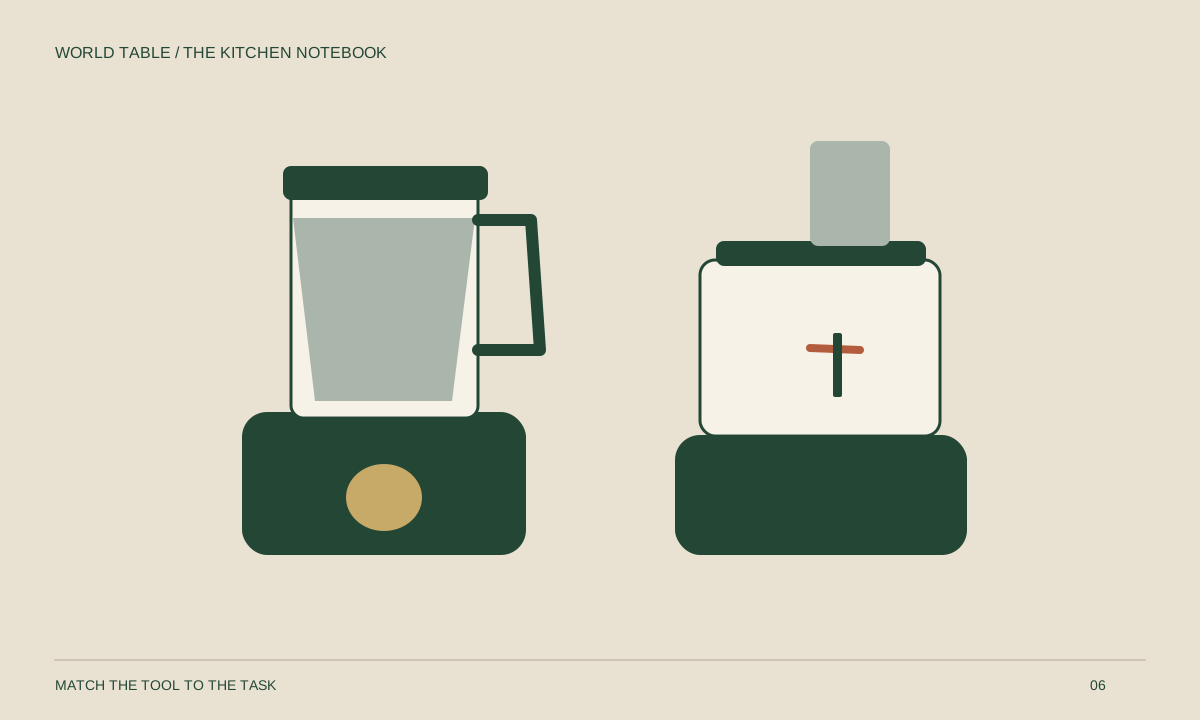
A blender is generally suited to smooth mixtures with enough liquid; a food processor handles chopping and, with the right discs, slicing and shredding. An immersion blender blends in its container. Capabilities and hot-liquid limits depend on the specific model.
In this guide
Compare the job before the wattage
| Task | Useful starting choice | Important limit |
|---|---|---|
| Smoothies and liquid sauces | Countertop blender | Check frozen-ingredient and ice-crushing approval. |
| Chopping vegetables or nuts | Food processor or small chopper | Pulse to control texture; do not overload. |
| Slicing and shredding | Processor with the correct disc | A standard blade alone cannot create uniform slices. |
| Blending soup in a pot | Immersion blender | Observe hot-liquid limits and immerse the head before switching on. |
| Dough | Processor specifically rated for that dough | Respect quantity and run-time limits; not every motor can do it. |
When a countertop blender earns its space
Choose it when you regularly make smoothies, smooth sauces or other mixtures that circulate around a blade. Jar shape, lid design and cleaning matter alongside motor specifications. A high power number alone does not tell you whether small portions circulate effectively.
Check the minimum useful batch, whether the jar can handle hot ingredients and how it vents. Never put hot liquid in a sealed personal-blender cup unless the manufacturer explicitly permits it; pressure can build. Treat ice crushing and grinding dry ingredients as model-specific abilities.
When a food processor is the better fit
Choose a processor when your work is mostly chopping, grating, shredding or producing a controlled coarse texture. A large bowl helps for bulk vegetables, but a very small quantity may simply ride above the blade. A mini chopper can be a better fit for a little herb dressing.
Useful attachments are the ones you will wash and use: a slicing disc, a shredding disc or an approved dough blade. Check the feed tube and use its pusher; never put fingers into the chute. Disconnect power before handling blades or clearing a blockage.
When a stick blender is enough
An immersion blender saves transferring suitable soup or sauce into a separate jar. Use a deep vessel with enough food to cover the blending head, keep it below the surface to reduce splashing and start gently. Remove the pot from active heat when the instructions require it.
A stick blender does not automatically replace a processor’s slicing discs or a countertop blender’s frozen-drink performance. Attachments can expand its uses, but the size, motor duty and cleaning procedure still decide whether it suits your regular batches.
A simple buying decision
If breakfast smoothies are the daily job, start with a blender. If you chop and shred large amounts each week, look at a processor. If your main task is smoothing cooked soups, an appropriate immersion blender may be enough. Buy a second appliance only after the first leaves a recurring job unsolved.
Measure storage height, read cleaning instructions and check whether replacement jars, seals or blades are available. Easy setup and cleaning often determine whether an appliance is used or stays in the cupboard.
A few useful answers
Can a blender replace a processor for chopping?
It can perform some overlapping tasks, but liquid circulation and blade design make it less suitable for many even, coarse chopping jobs.
Can every blender handle hot soup?
No. Follow the specific jar and lid limits; sealed personal-blender cups often prohibit hot ingredients.
Care and appliance instructions vary by model. Use your product’s stated limits and the method that suits its material.
Put it into practice