The quick answer
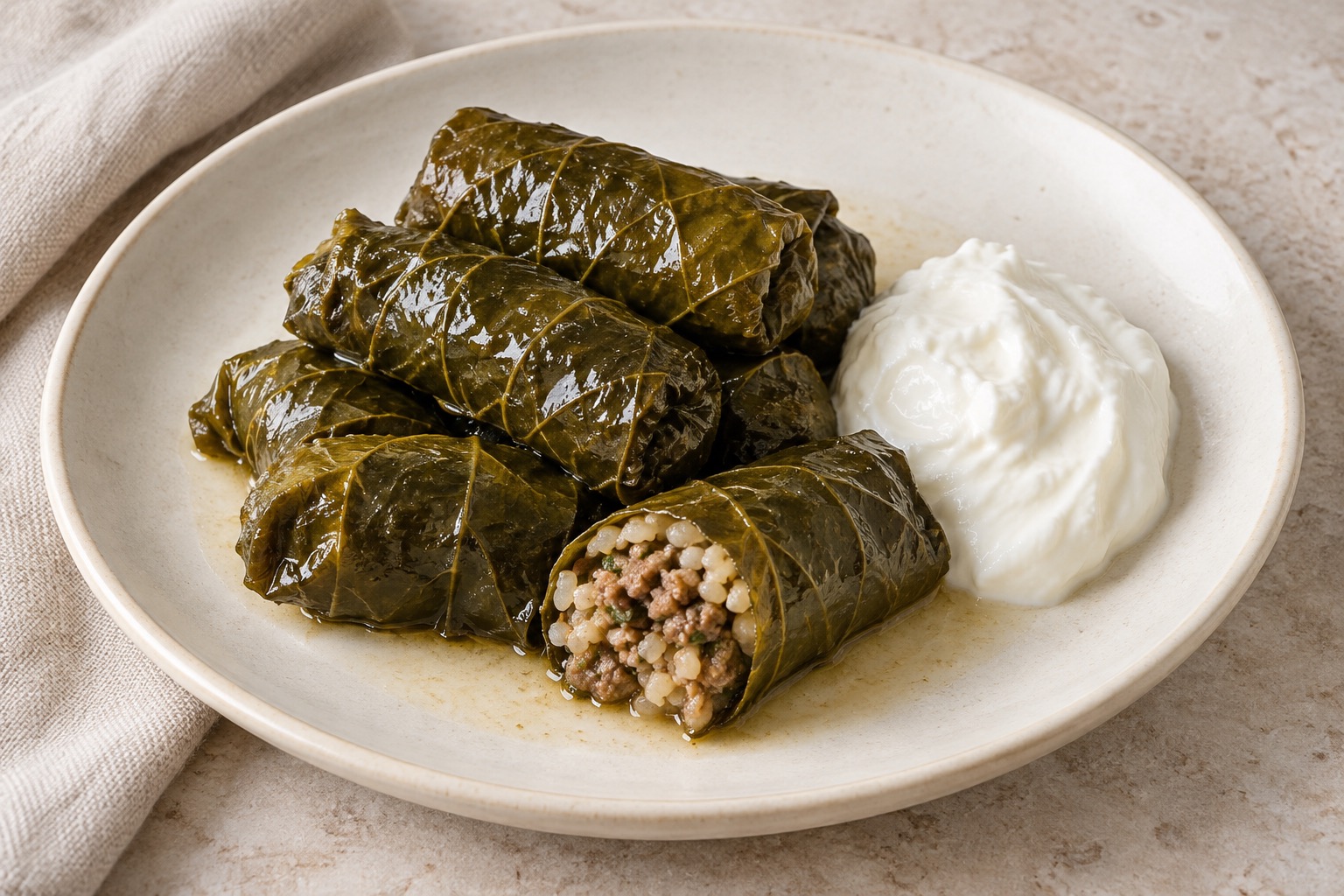
Rinse and drain preserved grape leaves, tasting a prepared leaf to judge its saltiness. Wash suitable fresh leaves and blanch until flexible. Trim tough stems, place the prominent-veined side upward for filling and roll without packing so tightly that expanding rice tears the leaf.
In this guide
Choose leaves suitable for eating
For fresh leaves, use a known edible grapevine from a source that is suitable for food harvesting. Avoid unknown plants, damaged leaves and vines treated with unsuitable pesticides. Young, tender leaves are generally easier to roll than large, leathery leaves.
For jarred leaves, follow the package’s preparation and storage instructions. Discard a jar that is leaking, swollen or otherwise suspect. Buying a preserved product does not remove the need to inspect the leaves and keep leftovers properly refrigerated.
Prepare fresh and brined leaves differently
Sort and trim
Unfold gently and snip the projecting stem without cutting a large hole at the leaf base. Keep sound torn leaves for lining the pot or small repairs.
Rinse preserved leaves
Separate them under clean water and drain. If strongly salty, soak in fresh water as the package permits, then drain and check a leaf again.
Soften fresh leaves
Wash, then blanch small batches in boiling water until flexible; this may take a few minutes depending on age and thickness. Remove carefully, cool and drain. Do not assume all leaves need exactly the same time.
Arrange for rolling
Lay a leaf with its pronounced veins facing up so the smoother face becomes the outside. Add the recipe’s measured filling near the base and fold the sides over before rolling.
Leave room for the filling to finish cooking
If the filling contains uncooked rice, it needs space to expand. Make a neat enclosed roll without compressing it like a sealed sausage. Use the rice preparation and cooking-liquid quantity in the specific recipe; raw and precooked fillings require different methods.
Line the pot if directed, arrange rolls seam-side down and use a suitable heatproof weight only when the method specifies it. A gentle simmer protects the leaves. A tender wrapper does not prove the meat filling is done; check the filling’s safe endpoint.
Avoid common preparation errors
| What you notice | What to change |
|---|---|
| Leaves crack while rolling | They may be too old, dry or insufficiently softened. |
| Finished dolma tastes very salty | Rinse or soak brined leaves appropriately and reduce added salt. |
| Rolls split around rice | Reduce filling, leave expansion room and follow the rice method. |
| One leaf has a small tear | Use a sound leaf or a small overlap; save badly torn ones for lining. |
A few useful answers
Do jarred leaves need blanching?
Many are already softened, but products differ. Follow their label and test flexibility rather than boiling every jar identically.
Are dolma and Armenian tolma always grape-leaf dishes?
No. Names and regional versions also include other stuffed leaves or vegetables. This guide focuses on grape-leaf preparation.
Use the full recipe alongside these tips, and follow the stated care and safety limits of your equipment.
Put it into practice