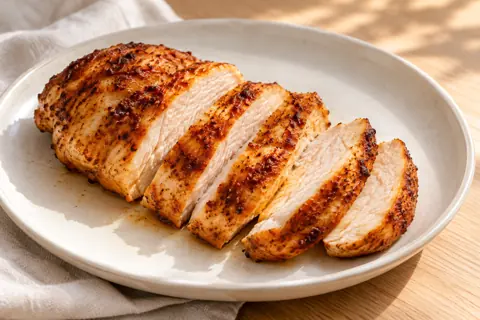
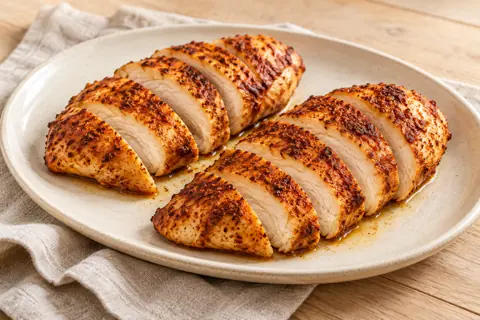
The quick answer
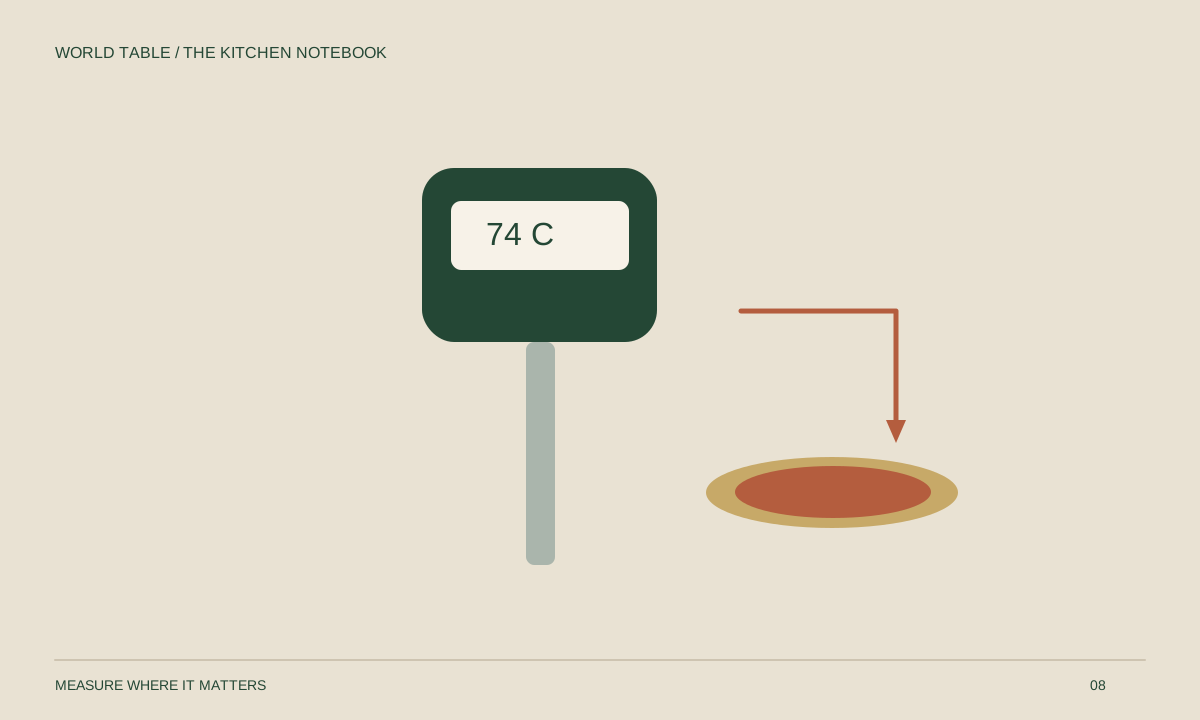
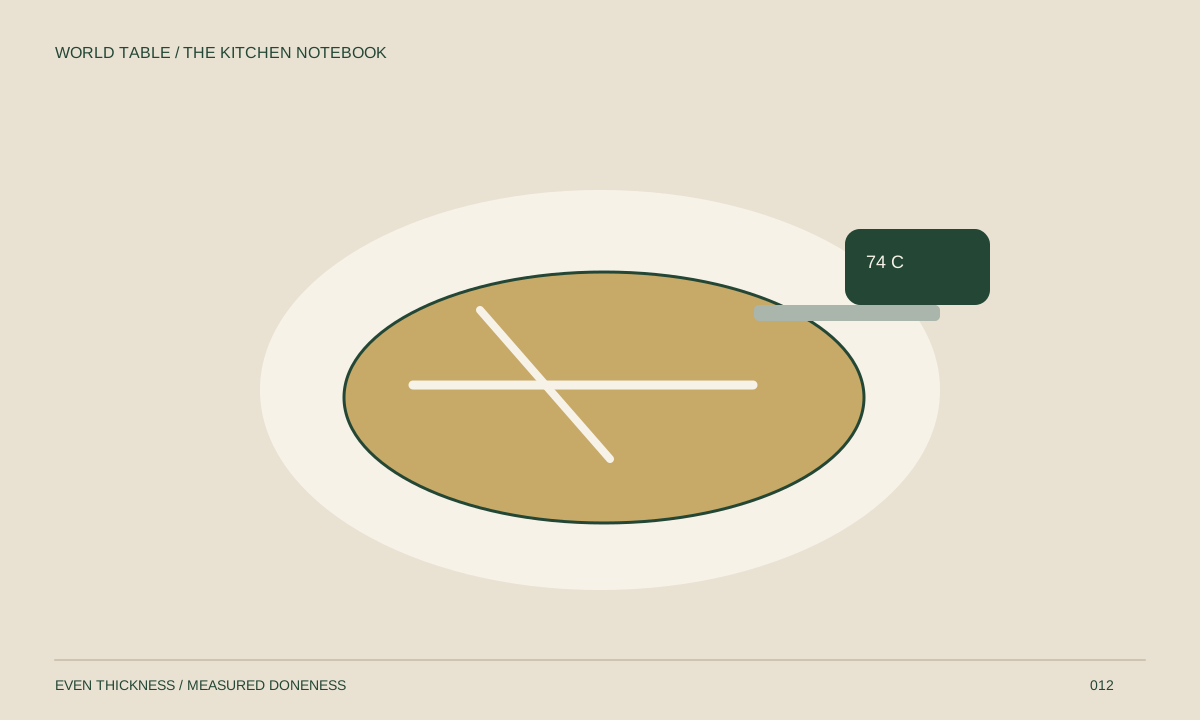
Make the pieces an even thickness, avoid crowding and check the thickest part with a food thermometer. For a straightforward home method, cook chicken to 165°F / 74°C, then stop cooking and let it rest briefly before slicing.
In this guide
Even thickness makes the biggest practical difference
A breast with a thick rounded end and a very thin tip cannot cook evenly at one speed. Butterfly a large breast or gently flatten it between suitable coverings, using a stable board. Keep raw poultry and its tools separate from ready-to-eat food; do not rinse raw chicken.
Pat the surface dry when browning is part of the method. Season according to the recipe. If the packaging says the chicken contains an added salt solution, account for that before adding a heavily salted marinade.
Brown, then finish with control
Choose a suitable portion
Similar-sized pieces finish closer together. Separate small cutlets from large breasts rather than using one timer for both.
Leave room
In a pan or air-fryer basket, leave space appropriate to the appliance and recipe. Crowding changes browning and cooking time.
Adjust the heat
A hot initial surface can brown the chicken, but prolonged aggressive heat can dry the exterior before the center is ready. Lower heat to finish as the recipe directs.
Measure the center
Insert the thermometer into the thickest part, often from the side for a thin cutlet. Check more than one piece. Reach 165°F / 74°C, then remove from the heat.
Rest and slice for a better result
Let the chicken rest for a few minutes while you finish the plate. Resting helps serving quality, but it does not replace reaching a safe cooking temperature. Cut across the visible muscle fibers where practical and spoon the recipe’s sauce or pan juices over the portions.
For meal prep, keep some cooking liquid or sauce with the chicken and reheat only the portion you need. Reheating bare slices aggressively often produces a drier result than reheating covered with a little moisture.
Why the chicken still feels dry
| What you notice | What to change |
|---|---|
| Thin end dry, middle fine | Make thickness more uniform next time. |
| Very dark exterior, underdone center | Use lower finishing heat and verify the center. |
| Dry after reheating | Cover, add a little moisture and stop once thoroughly reheated. |
| Timing differs from recipe | Piece size, appliance and starting temperature vary; measure doneness. |
A few useful answers
Can I judge doneness by clear juices?
Use a food thermometer. Color and juices alone are not dependable checks.
Does a marinade guarantee juicy chicken?
No. Flavoring cannot compensate for cooking the breast too far past doneness.
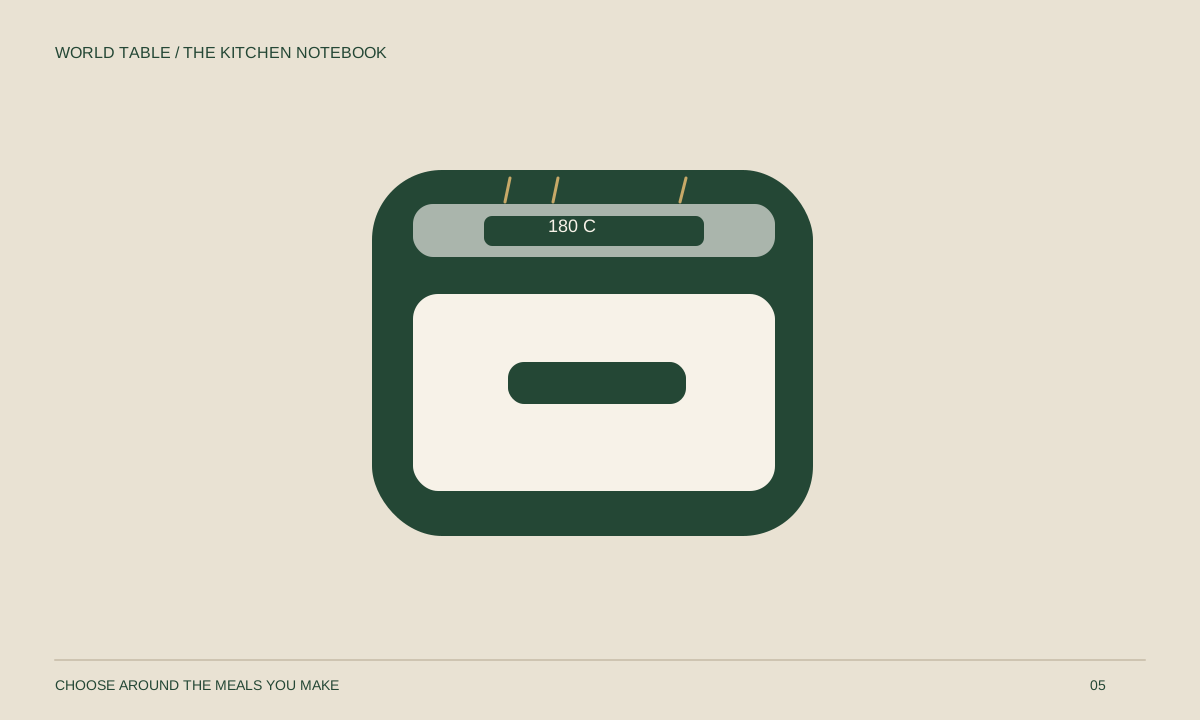
Use the full recipe alongside these tips, and follow the stated care and safety limits of your equipment.
Put it into practice