The quick answer
Bread flour usually has more protein than all-purpose flour and can develop a stronger, chewier dough. All-purpose flour suits many everyday breads and softer baked goods. Substitutions often work in ordinary yeast dough, but may change water needs and texture; use the recipe’s weight and watch the dough.
In this guide
Read the bag rather than just the name
Protein content and flour behavior vary by brand and country. Two products called all-purpose may have noticeably different strength. Bread flour is intended for stronger dough, but a high number alone does not tell you every detail of absorption or handling.
Cake flour, self-rising flour and gluten-free blends are not simple equivalents. Self-rising flour brings added leavening and salt; a gluten-free blend cannot form wheat gluten. Italian 00 describes a milling category and does not automatically mean high-strength bread flour.
Choose for the finished texture
| Goal | Useful starting choice | What can change |
|---|---|---|
| Chewy yeast bread or pizza | Bread flour or the recipe’s named flour | More strength; water needs may increase. |
| Soft everyday loaf | All-purpose or a suitable bread flour | Texture depends on hydration and handling too. |
| Tender cake or pastry | The flour specified by the recipe | Strong flour may make it tougher. |
| Gluten-free baking | A recipe for the chosen blend | Wheat-flour substitution rules do not apply. |
Make a controlled substitution
Keep the weight
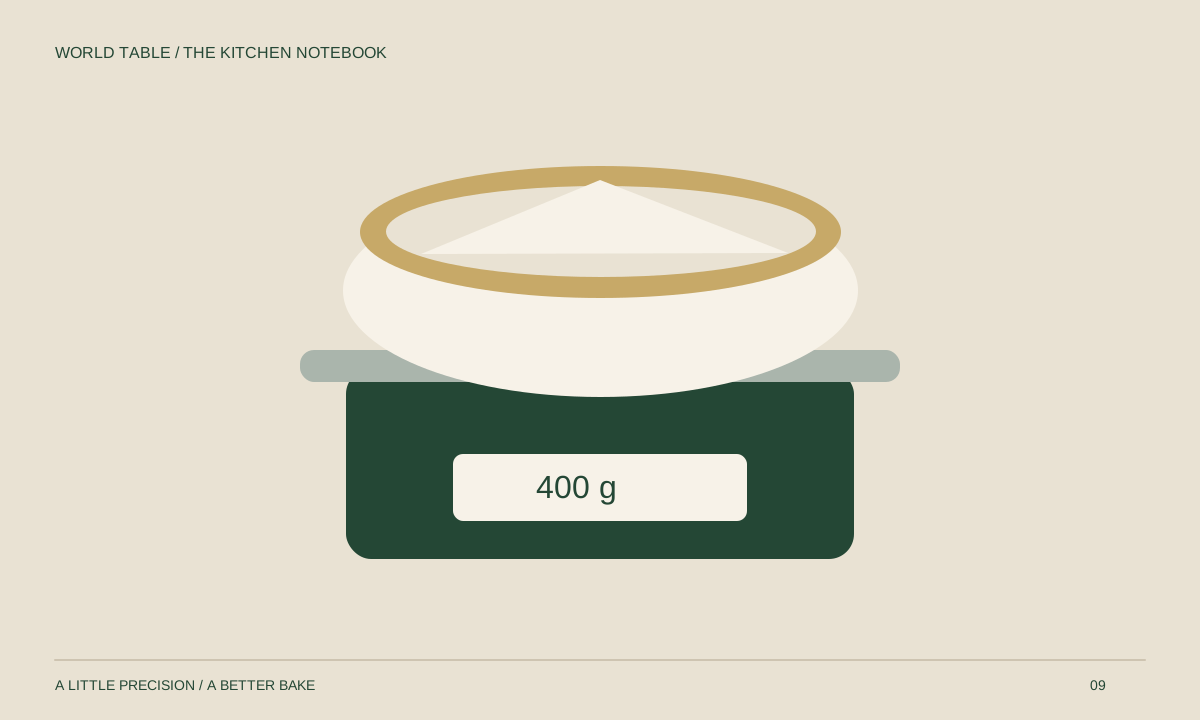
Swap by the recipe’s gram weight rather than an improvised extra cup. Write down the brand so you can repeat the result.
Hold back a little water if needed
When using a weaker flour in a dough designed for stronger flour, reserve a small portion of the water and add it only if the texture needs it.
Allow hydration time
Rest a rough mixed dough before deciding it needs more flour. Water absorption takes time, especially with whole grains.
Judge the texture
Look for the recipe’s described softness and elasticity. Do not force a wet artisan dough to feel like a stiff sandwich dough.
Know when a swap needs a different recipe
Very wet doughs and highly enriched breads can be less forgiving of weaker flour. A flour change can alter rise and structure even when the same grams are used. For a reliable first attempt, use the specified type and change one variable at a time.
Whole-wheat flour introduces bran and different water absorption. Replace only a portion when experimenting, or choose a formula designed for whole wheat rather than expecting an identical result.
A few useful answers
Can bread flour replace all-purpose in cookies?
Sometimes, but it can change chewiness and spreading. A cookie recipe designed for that flour is a safer starting point.
Does higher protein guarantee a better loaf?
No. Flour suitability, fermentation, hydration and handling all matter. Choose strength for the recipe’s goal.
Use the full recipe alongside these tips, and follow the stated care and safety limits of your equipment.