The quick answer
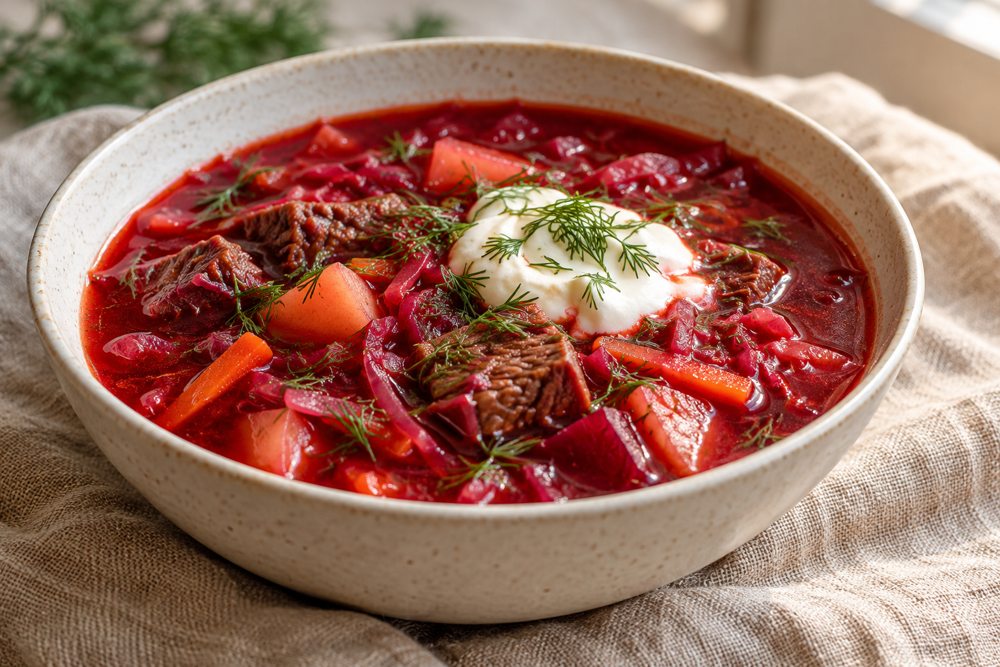
Use red beets, avoid unnecessarily long aggressive boiling after they are tender and add the recipe’s vinegar or lemon in measured amounts. Cook ingredients in an order that lets the beets finish without simmering all day. Color varies with the beets and the recipe.
In this guide
Why the color changes
Red beet pigments are sensitive to prolonged heat and the surrounding conditions. A soup that starts bright can become more muted as it cooks. The beet variety, amount of stock, tomatoes and other vegetables also influence the final shade.
Borscht has many regional and household versions. Some are ruby red, others more orange or deep purple. A specific color is not the only measure of a good soup, and pale beet varieties cannot deliver the same red result as red beets.
Plan the cooking order around tenderness
Prepare consistent pieces
Grate or cut beets to the size specified by your recipe. Uniform pieces become tender more evenly than a mixture of fine shreds and thick chunks.
Give slow ingredients their head start
Cook stock, meat and firmer vegetables according to the method so the beets do not need to wait through an unnecessarily long final simmer.
Use the specified acid
Add the recipe’s measured vinegar or lemon at its intended stage. Taste after mixing; do not pour in large amounts solely to chase color.
Finish gently
Once the vegetables and meat are properly cooked, avoid prolonged hard boiling. Adjust seasoning, then serve with the intended herbs and toppings.
Check the whole recipe, not one trick
| What you notice | What to change |
|---|---|
| Flavor good, color muted | Review beet variety and total simmering time next time. |
| Too sour after adding vinegar | Restore balance with suitable unsalted soup ingredients; stop adding acid. |
| Beets still firm | Continue cooking until tender; bright color does not replace doneness. |
| Soup looks orange | Tomato, carrot and the proportion of beets may explain the shade. |
Reheat portions instead of repeatedly boiling the pot
Cool and refrigerate soup promptly in shallow portions. When serving leftovers, heat the amount needed thoroughly and follow soup reheating guidance. A fresh garnish can improve the presentation, but do not underheat leftover soup simply to preserve its color.
For the next batch, note your beet weight, cut size, acid quantity and finishing time. Adjust one of those variables at a time. Adding raw beet juice at the table may change both flavor and handling requirements; it is not necessary for a good home-style borscht.
A few useful answers
Can vinegar make brown soup bright red again?
It can affect the shade but cannot reliably reverse pigment already damaged by prolonged cooking.
Should I add baking soda?
No. It changes the acidity and can work against the color and flavor you are trying to preserve.
Use the full recipe alongside these tips, and follow the stated care and safety limits of your equipment.
Put it into practice