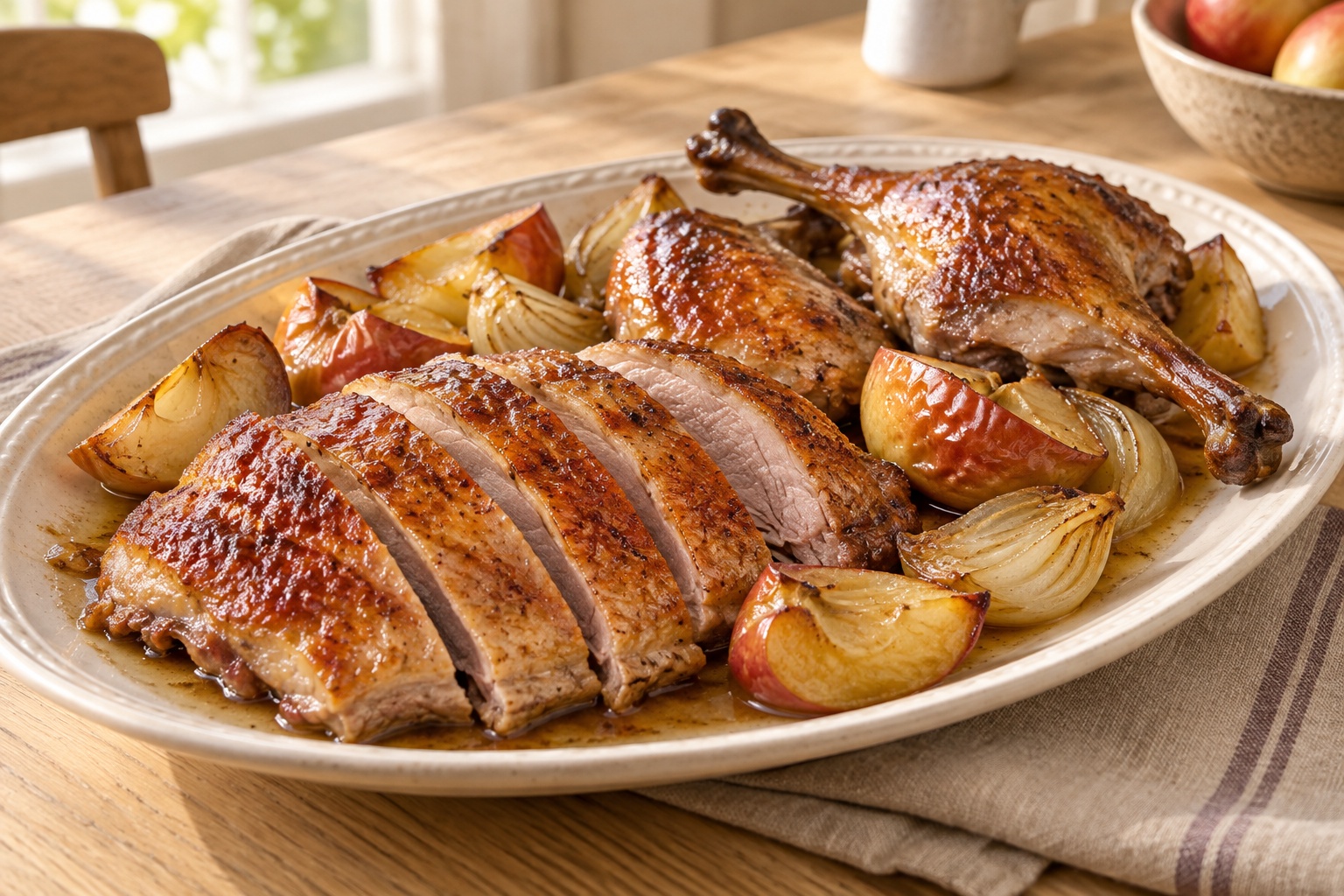
Each recipe provides measured ingredients, a detailed method, practical substitutions, storage guidance and approximate nutrition. A finished-dish illustration and four preparation images help explain the written steps. The recipes have not undergone independent kitchen testing.
Equipment
- Deep 35 × 25 cm / 14 × 10 in roasting pan
- Roasting rack that fits the pan
- Food thermometer
- Tongs
- Heat-safe bowl for rendered fat
- Carving board
- Thin skewer for pricking skin
- Foil if needed to shield darkening skin
- Kitchen scale
- Separate vegetable and raw-poultry boards
- Sharp carving knife
- Long-handled spoon for removing fat
- Oven mitts and heatproof trivet
- Clean serving dish for roasted apples
- Shallow containers for leftovers
Before you begin
Metric amounts are the reference; US quantities are rounded guides. A kitchen scale is especially useful for dough and baking. Use raw meat, fish and dry grains unless another state is specified. A trimmed or peeled weight is measured after that preparation. Whole birds and bone-in cuts have a different edible yield from prepared fillets or boneless meat. Dough water, braising liquid and water for boiling are different entries. Follow the instruction to retain, reserve or discard each one. Do not pour a full pot of boiling water into a sauce that needs only a small reserved amount. Salt volume changes with crystal size; spoon guides assume fine salt. Flour cup weights depend on filling method and flour type. Use the gram amount when consistency matters and keep spoons level.
Make it work
- Firm pears can replace apples at the same cored weight, checking early because they may soften faster. A larger duck needs more time and a larger pan. Chicken is not a direct replacement for the stated roasting schedule or nutrition.
Prep 25 min · Cook 135 min · Waiting 20 min
Times are estimates. Thickness, pan size, oven behavior and batch size affect the result. Follow tenderness, texture and temperature instructions. Total time includes the stated waiting periods and subtracts only the overlap identified in the recipe.
Ingredients
- Duck and apples — 77.6 oz / 2200 g Whole fresh domestic duck — ready-to-cook weight after removing giblets and loose cavity fat; fully thawed if frozen
- Duck and apples — 21.16 oz / 600 g Firm tart apples — cored weight; skin left on; cut into quarters
- Duck and apples — 7.05 oz / 200 g Onion, peeled — raw weight
- Duck and apples — about 1⅔ tsp; varies by brand / 10 g Fine salt
- Duck and apples — about scant ½ tsp / 1 g Ground black pepper
- Duck and apples — 0.07 oz / 2 g Caraway seeds — lightly crushed
- Duck and apples — 8.45 US fl oz / 250 ml Water
- Duck and apples — 5.07 US fl oz / 150 ml Water — reserve if pan dries
Step-by-step method
- Prepare the duck
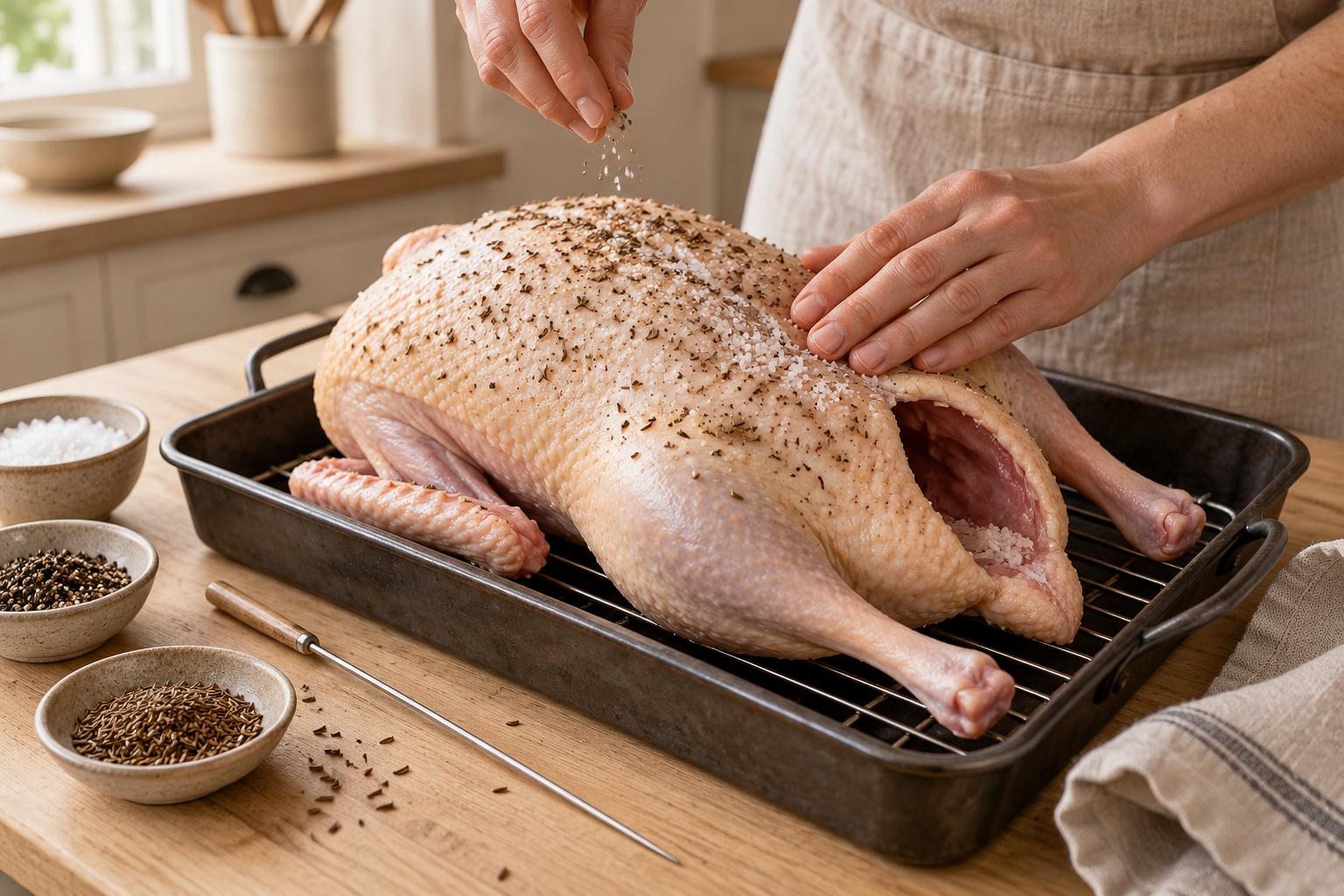
Heat the oven to 180°C / 355°F, conventional heat. Remove giblets and any loose cavity fat; neither is included in the ready-to-cook weight. Pat the fully thawed duck dry without rinsing. Prick only the thick fatty skin around the legs and lower breast with a skewer, avoiding the meat. Rub the outside and cavity with salt, pepper and caraway. Leave the cavity unstuffed. Use a dedicated raw-poultry board and wash hands and utensils afterward. - Set up the roasting pan
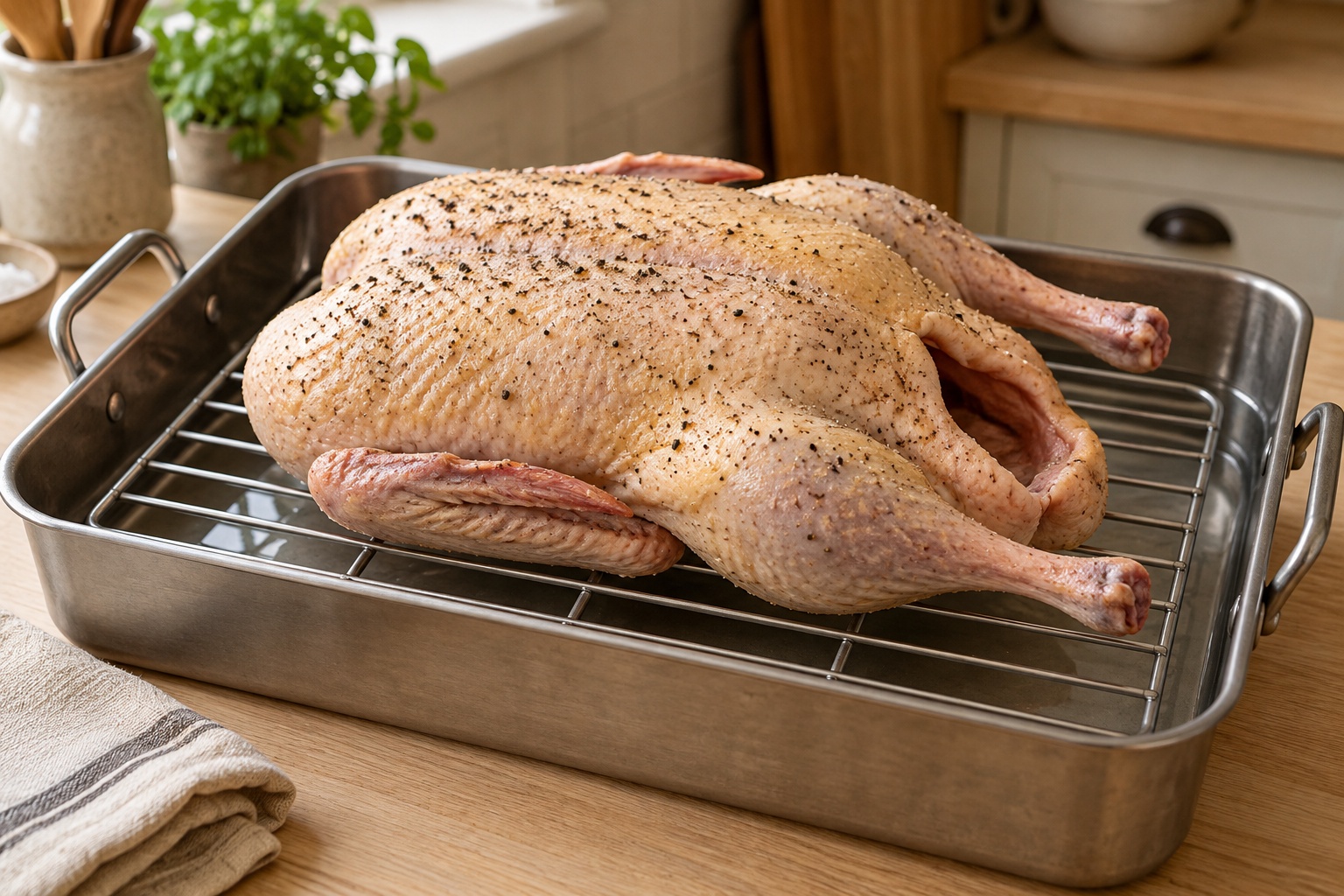
Put the rack in the deep roasting pan and set the duck breast-side up on it. Pour 250 ml / 8.5 US fl oz water into the base below the rack. The pan must have room for apples later and enough depth to collect rendered fat. Roast on the middle oven shelf. - Roast and manage the fat
Roast for 75–90 minutes. After 45 minutes and again before adding apples, set the pan securely on a heatproof surface using oven mitts. Carefully spoon excess rendered fat into the heat-safe bowl, keeping a thin layer of juices in the pan. Do not tip a full hot pan or add water to the collected hot fat. If the pan base dries, slowly add small amounts of hot reserve water at the edge, up to 150 ml / 5.1 US fl oz total; beware of splashing. Return to the oven. - Add the apples and onion
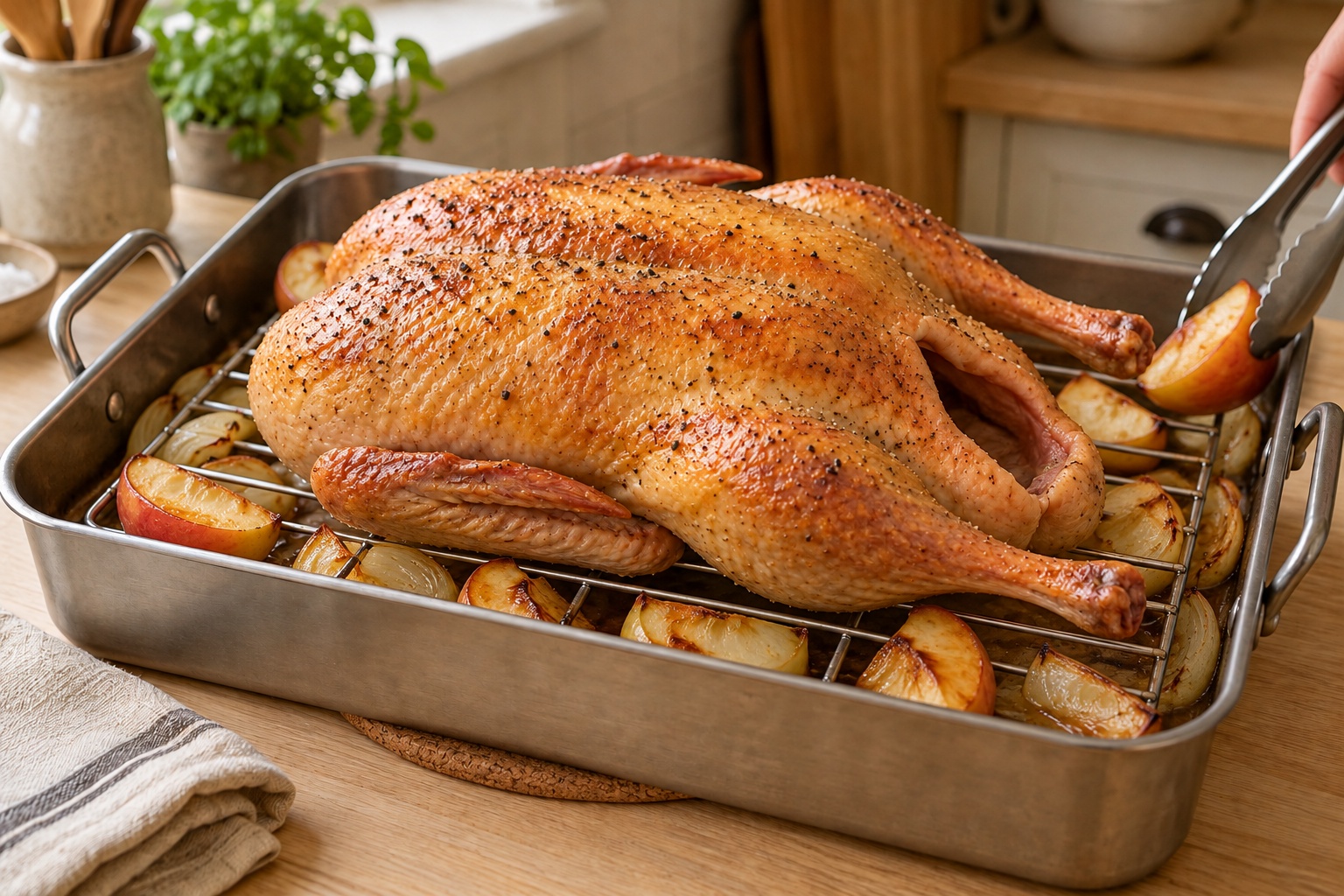
Core and weigh the apples, leaving their skins on, then cut into quarters. Cut the onion into thick wedges. Place apples and onion in the base around the rack, lightly coating them in the small amount of retained juices. Roast for another 30–40 minutes, turning the fruit once gently. - Check the bird thoroughly
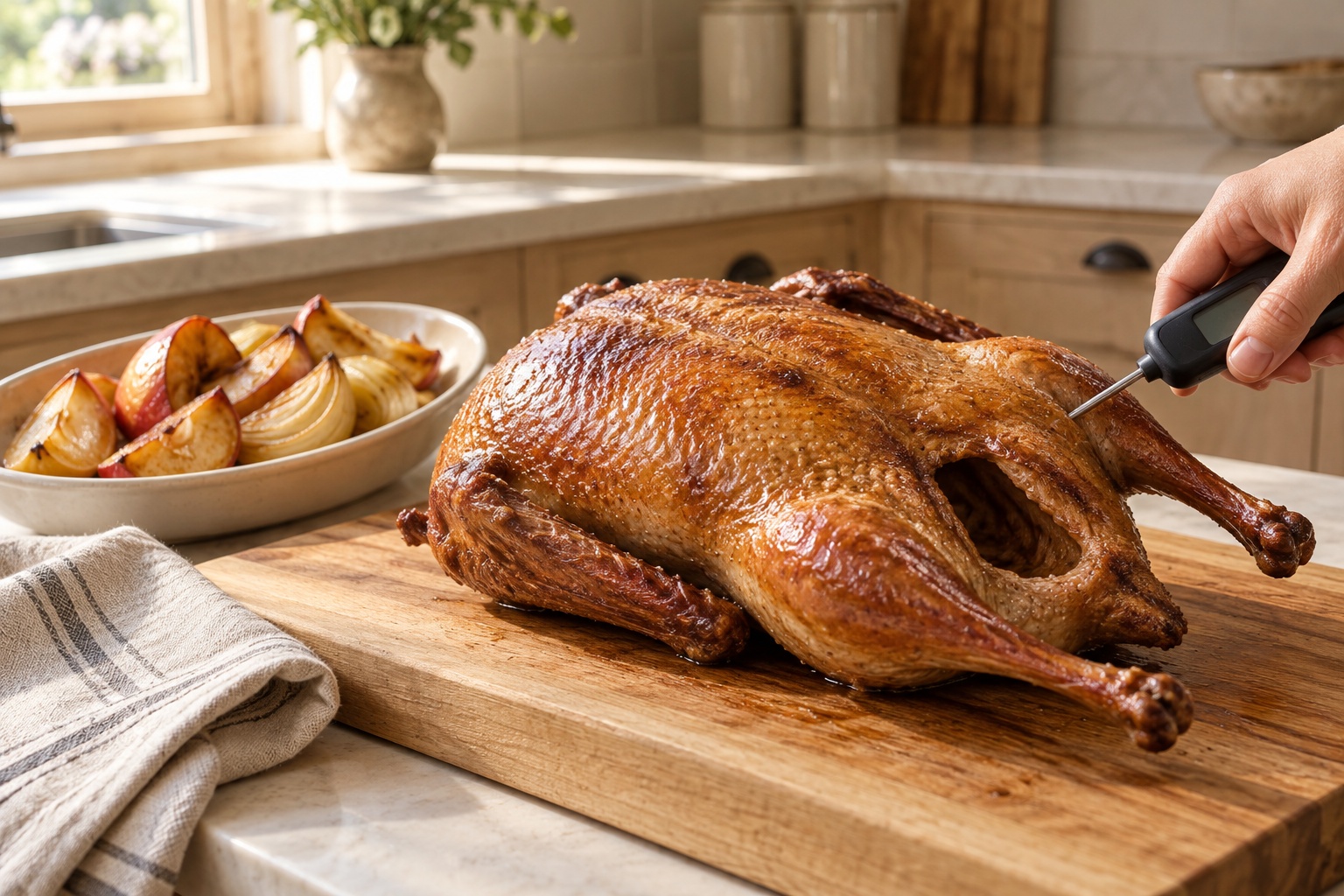
Check the thickest breast, the innermost thigh and near the wing joint without touching bone. Every site must reach at least 74°C / 165°F. The legs should move easily and the skin be golden. Continue roasting if any site is below the endpoint or the legs remain firm; cover darkening areas loosely with foil. Remove apple pieces earlier if tender before the duck is ready. - Rest and carve
Transfer the duck to a clean carving board and rest loosely covered for 20 minutes. Keep apples and onions warm. Carve the breast and legs, removing bones and any loose fragments. Divide the meat and skin into six portions with the apples and onion. The drained rendered fat is not served; reserve separately only if desired.
Cook’s notes
Pricking fatty skin helps release fat, but piercing the meat allows juices to escape. Keep the cavity unstuffed for this method. Check several sites with a thermometer; golden skin alone does not establish doneness.
Storage & reheating
- Refrigerate in shallow covered containers within 2 hours, or within 1 hour above 32°C / 90°F. Keep at 4°C / 40°F or colder and use within 3 days. Carve remaining meat off the bones before chilling in shallow covered containers. Reheat covered with a little water until hot throughout; skin will soften. Heat leftovers to 74°C / 165°F at the center. Freeze carved duck and apples separately for up to 2 months; thaw overnight in the refrigerator.
Allergens
No major allergens in the listed ingredients; check packaged seasonings.
Approximate nutrition
Per serving: 956 kcal · Protein 26 g · Carbohydrates 17 g · Fat 87 g.
Approximate per serving. Estimate conservatively counts all assumed raw edible duck fat although rendered fat is drained; actual portions may contain less. Values vary with bird, trimming and portion size.