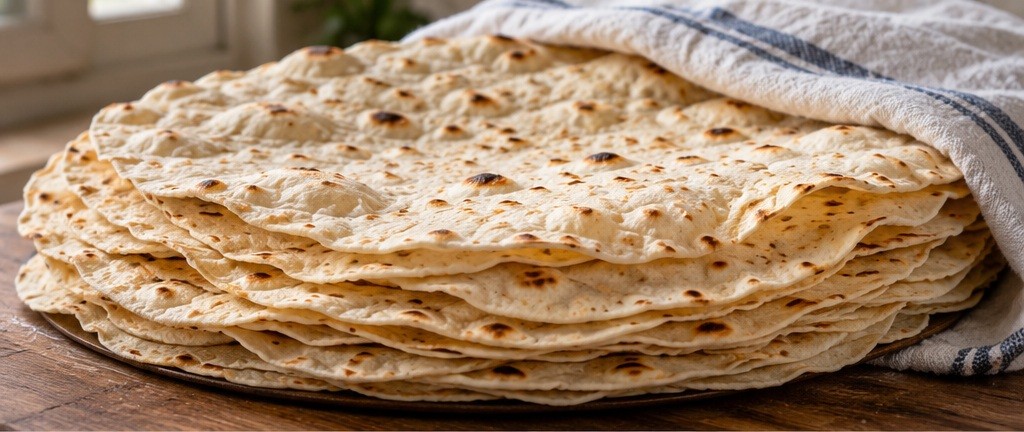
Serving suggestion. Nutrition is approximate.
Equipment
- Rolling pin and wide heavy griddle.
Before you begin
US cup = 240 ml; tablespoon = 15 ml; teaspoon = 5 ml. Use listed gram weights for consistency; weights are raw or dry unless described as cooked or drained.
- Use bread flour instead of all-purpose flour; add water a teaspoon at a time if needed, and allow extra resting if the dough resists rolling.
Make it work
- A small skillet requires smaller dough portions. Do not fold raw dough to force it into the pan; the folded areas will stay thick.
Prep 35 min · Cook 25 min · Waiting 30 min
Serves 12 / Makes 12 flatbreads / Prep 35 min / Rest 30 min / Cook 25 min. Times are estimates; chilling and resting are included in total time.
Ingredients
- 500 g / 17.6 oz All-purpose flour
- 300 ml / 10.1 US fl oz Water, room temperature
- 8 g / about 1 1/3 tsp Fine salt
- Up to 40 g / 1.4 oz Extra flour for rolling
Step-by-step method
- Mix and knead
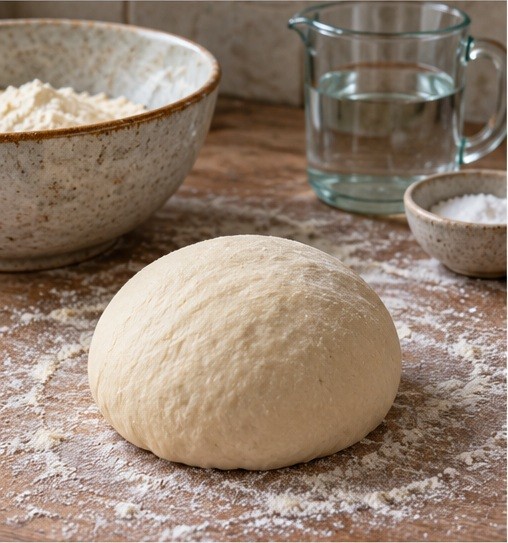
Dissolve salt in water and add to flour. Mix into a shaggy dough, then knead 7-10 minutes until smooth and supple. Add water a teaspoon at a time only if flour remains dry. The dough should be firm enough to roll, not sticky like batter. - Rest the dough
Cover and rest 30 minutes so the flour hydrates and the dough relaxes. Divide into 12 equal balls, about 67 g each. Keep every ball covered while working; dried skins crack during rolling. - Roll very thinly
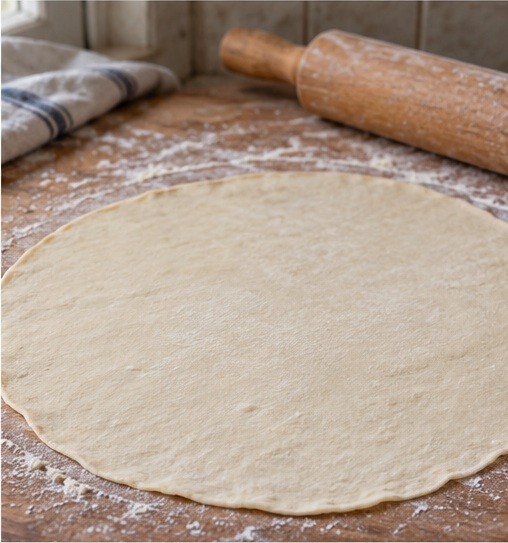
Dust the surface lightly and roll one ball into a 28-30 cm / 11-12 in round, or a shape that fits your griddle. Aim for about 1 mm / 1/32 in thickness. If it springs back, rest 5 minutes instead of forcing it. - Heat a dry griddle
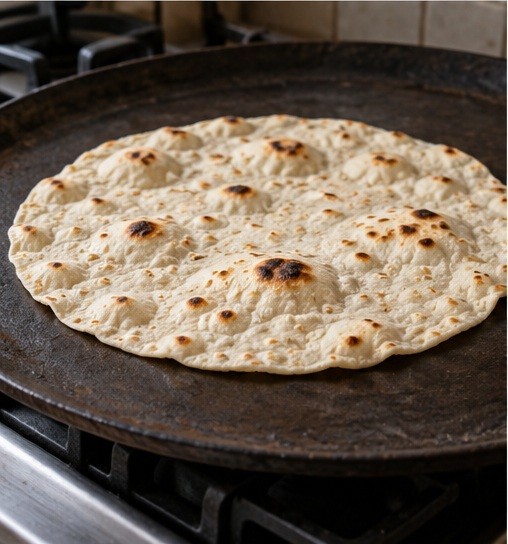
Preheat a wide heavy griddle over medium-high heat for several minutes. Lay on the dough without adding oil. Cook 35-60 seconds until bubbles and brown spots form, then flip and cook 20-40 seconds more. Lower heat if it burns before the floury surface disappears. - Keep the breads flexible
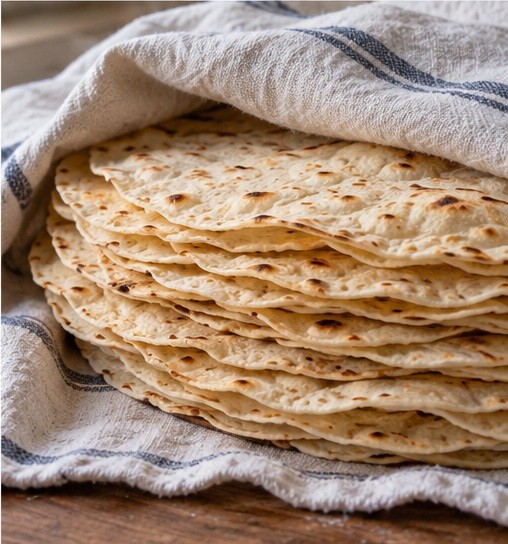
Stack cooked lavash under a clean towel. If the breads are becoming crisp, lightly mist the towel with water rather than soaking the bread. Roll and cook the remaining balls, adjusting the heat as the pan warms. - Cool before storing
Serve warm, or let the stack cool completely under the towel before wrapping airtight. Condensation inside a sealed warm bag encourages spoilage. Thin lavash dries quickly when left uncovered, so only uncover what you need.
Cook’s notes
A small skillet requires smaller dough portions. Do not fold raw dough to force it into the pan; the folded areas will stay thick.
Storage & reheating
- Cool completely and keep airtight at cool room temperature up to 2 days, or freeze up to 2 months.
Allergens
Contains: Wheat.
Approximate nutrition
Per serving: 155 kcal · Protein 4 g · Carbohydrates 32 g · Fat 0 g.
Approximate per serving of the complete recipe. Brands, substitutions, cooking losses and portion sizes affect the figures.